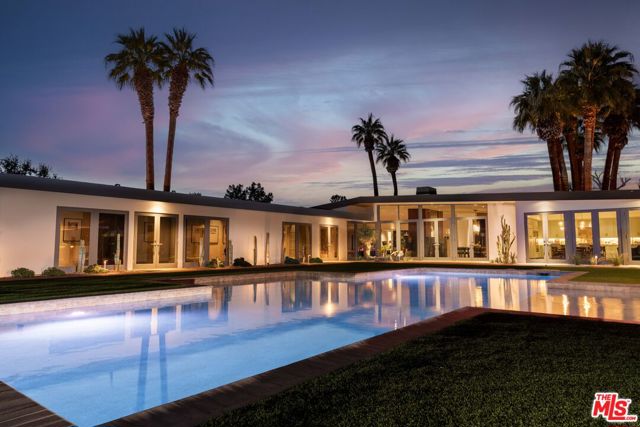
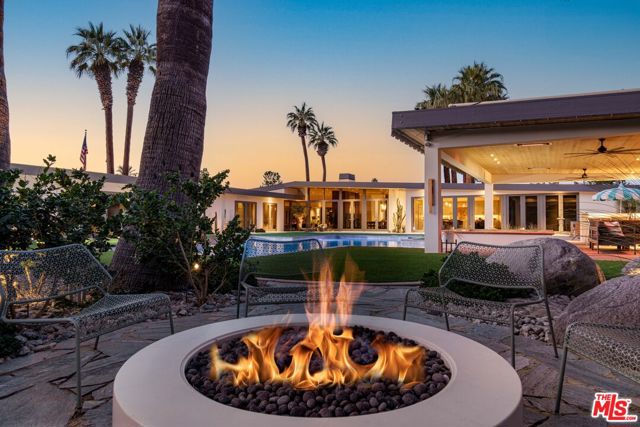
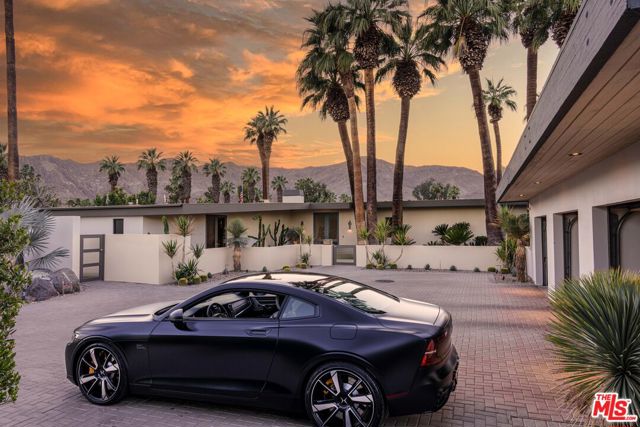
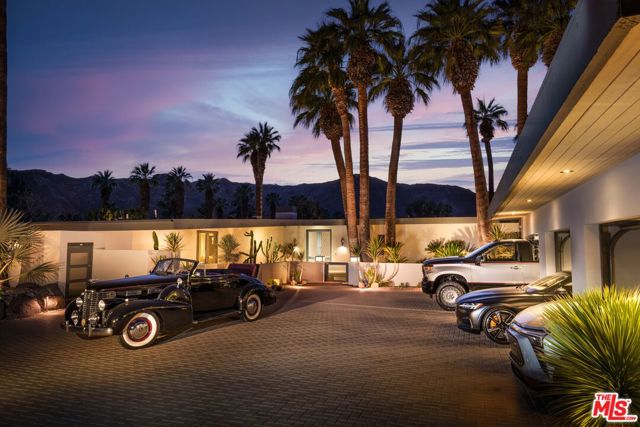
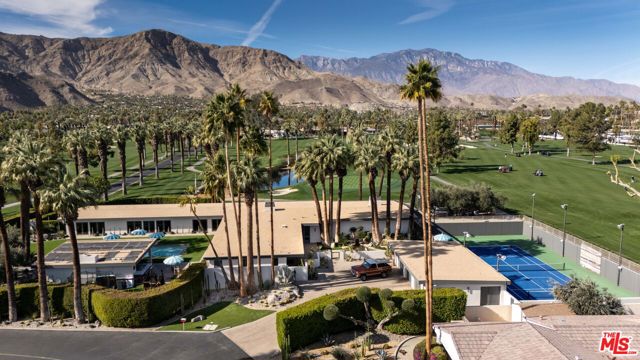
When LIFE magazine put 71308 Cypress Drive on its cover in May 1956 and christened it a "Push-Button Paradise," it cemented the estate as one of the most celebrated midcentury modern houses in America. It is one of the few private homes ever designed by Welton Becket. His practice was among the largest architectural firms in the world (the Capitol Records Building, the Dorothy Chandler Pavilion), yet it almost never designed private homes. In 1967, William Cody, the desert's most celebrated modernist, expanded the house. Two of the era's defining architects, one address. London's Architectural Review called it "a gadgeteer's nirvana" in 1957; House Beautiful showcased it in 1963; Huell Howser even devoted an episode of "California's Gold" to it in 2001.Built for Robert Paxton McCulloch, the renowned chainsaw industrialist and, at heart, a land man. He founded cities: Lake Havasu in 1963 and Fountain Hills in 1970, each planned with C.V. Wood, the designer of Disneyland. It was McCulloch who bought the London Bridge and moved it to Lake Havasu. The house stands on the premier ground of the desert's first golf-course community, Thunderbird Country Club. The reasons McCulloch and Becket chose this ground are obvious: McCulloch took Lot No. 1, then bought the adjacent Lot No. 14, a full-acre double homesite wrapped on three sides by the golf course, and one of only two true estate homes in Thunderbird Estates set on a full acre. No neighboring house intrudes: no rooftops, only fairways rolling up to the Santa Rosa Mountains on one side and snow-capped San Jacinto on the other.The uncompromising Desert Modern estate contains 9,144 square feet: six en-suite bedrooms, six and a half baths, a library, an office, a gym, and an entertainer's bar, plus something almost unheard of in the desert, a full lower level with a wine cellar and a private movie theatre. A paver motor court, an extra-large three-car garage, and a golf cart garage complete the home. Emile Norman's artwork remains on property: the geological-strata mural at the sport court and the sun-legend mosaic in the library.The grounds live as a private desert resort: pool, outdoor kitchen, gazebo dining and lounge, and two fire-pit terraces under olive trees. The sunken, lighted sport court, set eight feet below grade to protect the view corridors, holds two pickleball courts and its own bedroom and bathroom.Most importantly, the house was never torn down. It stands today on its original plan, rooflines, a